Six Things the SBA Wants Every Small Business Owner to Know About AI
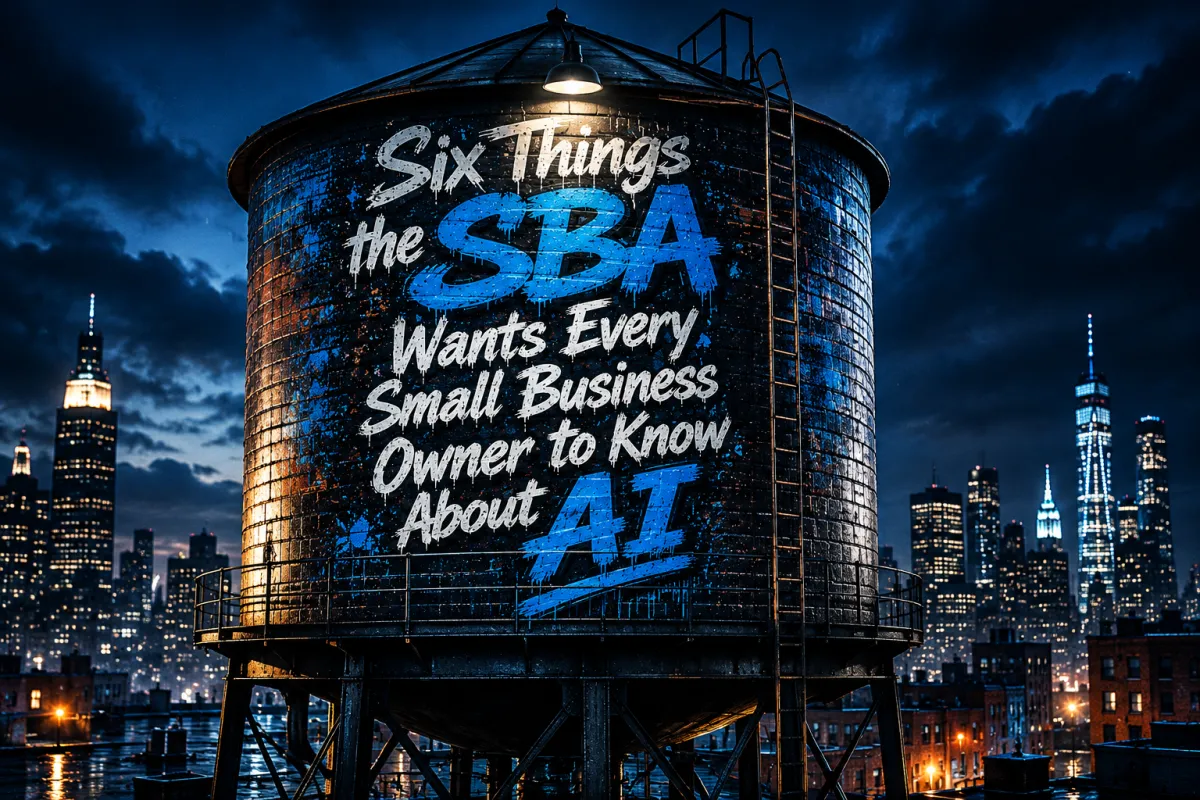
Six Things the SBA Wants Every Small Business Owner to Know About AI
The Small Business Administration (SBA) publishes a plain, no-hype guide on artificial intelligence (AI) for small business. Here is what it actually says, and what it means for you.
A bakery owner in Atlanta spent four hundred dollars on an AI tool last year. It promised to write her social media posts, answer customer emails, and manage her inventory. She used it twice. The posts sounded nothing like her. The emails went out before she could review them. One customer complained that a reply felt cold and robotic.
Here is what nobody told her before she bought it. The Small Business Administration (SBA), the same federal agency that backs small business loans, publishes a guide called "AI for small business." It is short, it is written in plain English, and it would have answered almost every question she ran into. Not because the SBA is an AI company. Because someone there sat down and wrote out, calmly, what AI can do for a small business and where it tends to go wrong.
Most small business owners have never seen this guide. That is not their fault. Government resources do not exactly trend on social media. But the six points inside it are worth ten minutes of your time, especially if you are still deciding what role AI should play in your business.
Key Takeaways
-Test AI tools small and cheap before committing real money to them.
-AI is most useful for catching problems early, not just generating content after the fact.
-Security tools powered by AI can react to threats faster than a person monitoring alone.
-Your own business data, run through AI, can reveal patterns you would never spot by hand.
-A short public statement about how you use AI is becoming an expected best practice, even though it is not required.
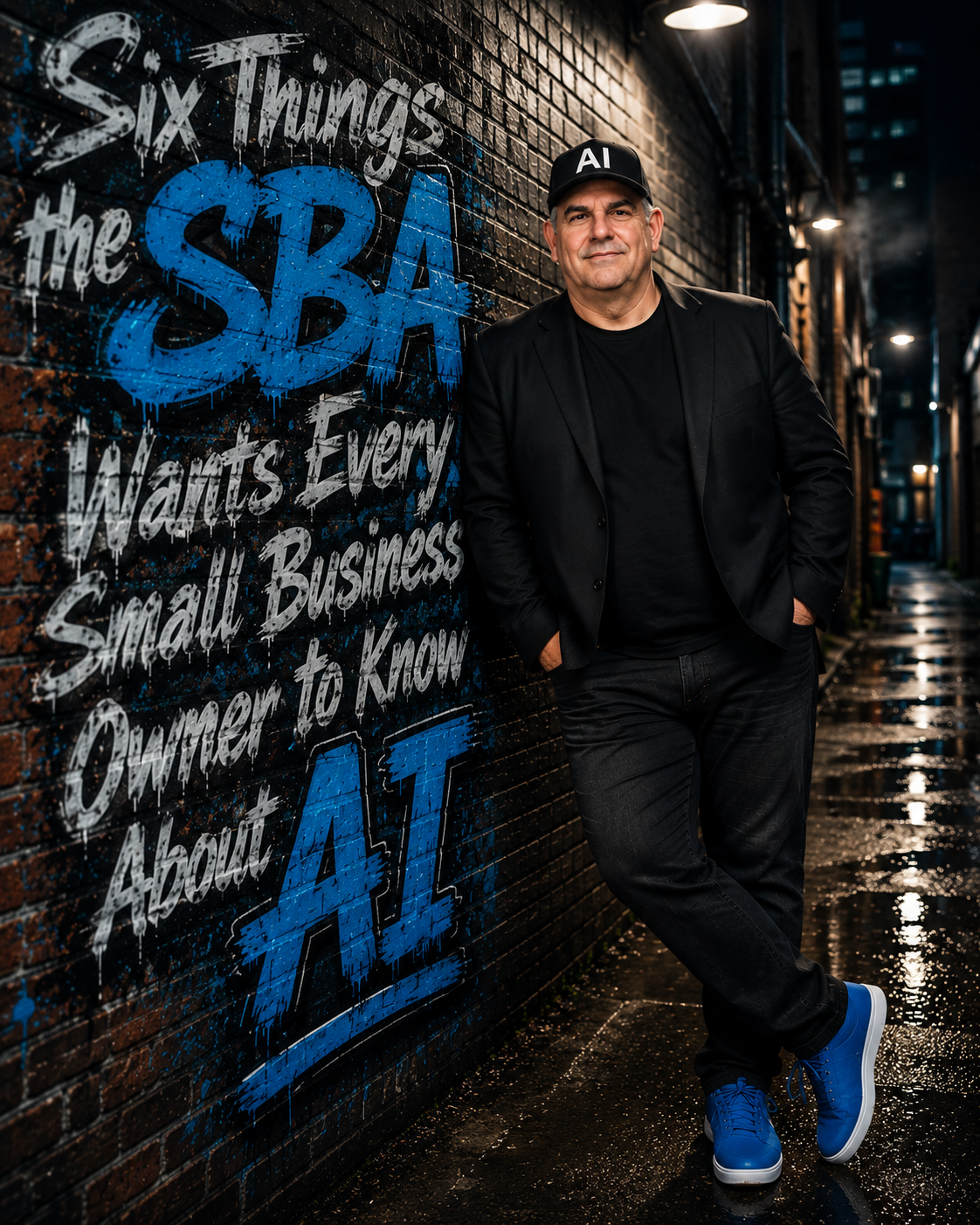
Image created in ChatGPT
The Problem
Small business owners are stuck between two extremes. One side says AI will fix everything: your marketing, your customer service, your scheduling, all of it, instantly. The other side says AI is too risky, too complicated, or not worth the trouble for a business of your size.
Both extremes lead to the same outcome. You either spend money on a tool that doesn't fit, as the bakery owner did, or you avoid AI entirely and keep doing things the slow way. Either choice costs you. The SBA guide exists because the federal government noticed this gap and decided small businesses deserved a straight answer.
The Evidence: Six Things From the SBA Guide
1. Start small, and test before you commit.
The SBA's guidance is direct on this point. AI is relatively new, so the smart move is to try free or low-cost versions of tools first and see if they actually add value before spending more. This sounds obvious, but it is the step most owners skip. They see a demo, they see a price, and they buy. A two-week free trial would have told the bakery owner everything she needed to know before that $400 left her account.
2. AI is at its best catching problems before they happen.
The guide highlights a use case that most owners never consider: prevention. Tracking delivery and travel disruptions so you can reroute before a shipment is late. Monitoring environmental risks to protect inventory ahead of a storm. Using rate optimizers to lower shipping costs automatically. None of this is glamorous. All of it quietly saves money in the background every single week.
3. AI can help guard your data, not just create it.
Most conversations about AI and small business focus on content: writing, images, and social posts. The SBA guide devotes real space to something else entirely: security. AI-powered security tools can process threat data faster than a person watching alone, and they can react to an attack and apply a fix in the time it takes a human to read the first alert. If you have not looked at your cybersecurity setup through this lens, this is worth a second look.
4. Your own data is the most valuable AI input you have.
Here is the reframe. AI is not just a tool for writing things. It is a tool for understanding things, specifically, your own business. The SBA guide recommends using your customer data with AI tools to spot patterns, compare your business to similar businesses, and identify gaps you can fix or advantages you can lean into. Most small businesses are sitting on years of data they have never actually looked at.
5. There is no law requiring AI disclosure yet, but the SBA says get ahead of it anyway.
This is the line that stood out most to me. The SBA guide states plainly that no federal or state law currently requires businesses to disclose their use of AI. And then it says, just as plainly, that doing so anyway is becoming an expected best practice. Their specific suggestion: draft a short public statement about how your business uses AI. Not because you have to. Because customers are starting to expect it, getting there first builds trust rather than looking like you were forced into it later.
6. A human always reviews what AI produces before it goes out.
The SBA guide closes its risk section with two specific warnings that connect to each other. First, AI-generated content can sometimes be sourced from material that infringes on someone else's copyright, patent, or trademark, often without you realizing it. Second, AI-generated messages and outreach can come across as impersonal, and some systems will even flag them as spam. The fix for both is the same: a person reviews the output before it reaches a customer. This is not a step you eventually outgrow. It is the step that makes everything else on this list safe to use.
The Framework: Human-First AI
Every one of these six points points back to the same idea. AI works best when a person is still steering. Not hovering over every keystroke, but checking the output, setting the direction, and staying accountable for what goes out under your business's name.
That is the whole premise behind Human-First AI. It is not a slogan. It is a sequence. Test small. Let AI watch for problems and patterns in the background. Let it strengthen your security. And keep a person in the loop on anything that reaches a customer, whether that is an email, a social post, or a piece of content.
The SBA did not invent this idea. But it is notable that a federal agency, writing for small-business owners with no technical background, arrived at the exact same sequence. That is not a coincidence. It is what happens when you think through AI adoption honestly, instead of from a sales pitch.
Frequently Asked Questions
Is the SBA guide actually free to read?
Yes. It is published on sba.gov as part of its business guide for managing your business, alongside topics such as cybersecurity and hiring. No sign-up required.
Do I really need to write a public AI disclosure statement?
Not legally, not yet. But the SBA frames it as a trust-builder, and trust is not something you can easily buy back once a customer feels misled. A short, honest paragraph on your website costs you nothing and heads off a future problem.
What is the biggest mistake small businesses make with AI?
Based on the SBA guide and what I see with clients, it seems to be skipping the testing step. Committing to a tool, a price, or a workflow before confirming it actually fits how your business runs.
Can AI really help with cybersecurity for a business of my size?
Yes. Many security vendors now build AI directly into their products, specifically because small businesses cannot afford a full-time security team. The AI does the constant watching; you do not have to.
Where do I start if I have not used AI at all yet?
Start with point one. Pick one task, find a free or low-cost tool, and test it for two weeks before deciding anything. Small, reversible steps beat big commitments every time.
Where to Go From Here
None of this requires a technical background, a big budget, or a leap of faith. It requires ten minutes with a government guide that most business owners have never seen, and a willingness to test before you commit.
If you want help walking through what these six points look like for your specific business, that is exactly the kind of plain-English, no-hype work AI Educational Solutions does every day. Start where you are. The rest follows.
If you are looking for a free AI tool, we offer Email Pro. It is 100 percent free.
Have questions about AI for your business? Reach out. I'm happy to help.
Michael Carmine
Founder & CEO | AIEducationalSolutions.org