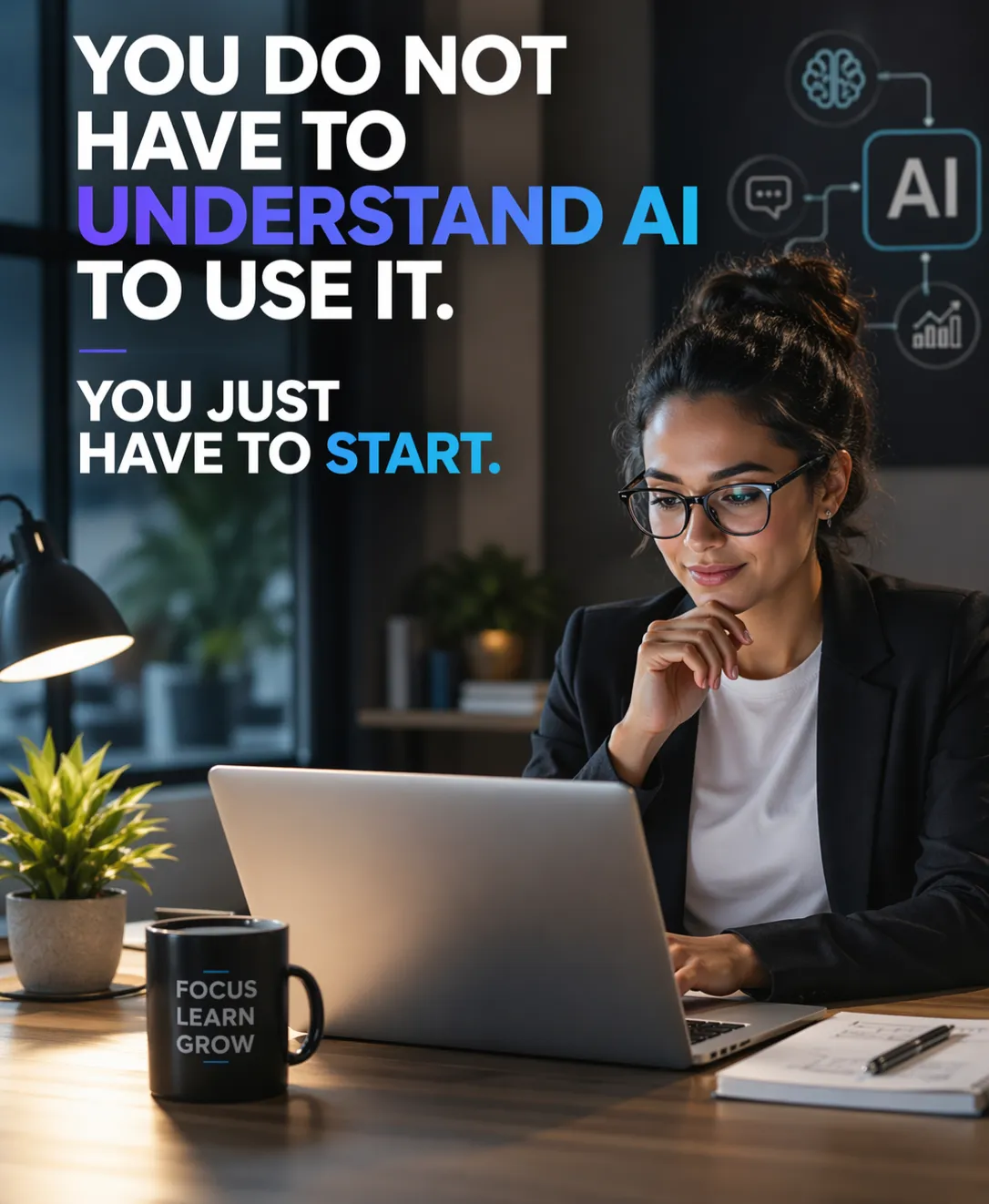
You Do Not Have to Understand AI to Use It. You Just Have to Start.
You Do Not Have to Understand AI to Use It. You Just Have to Start.
Nobody understood how email worked in 1995. They used it anyway.
Nobody understood how GPS calculated a route when navigation apps arrived. They still turned left when it said turn left. Nobody understood the algorithm behind Google Search. They typed what they needed and clicked the first result.
Technology has always moved faster than the average person's desire to understand it. That gap is not a failure. It is the whole point. The job of a useful tool is to remove the need for technical knowledge, not require it as the price of admission.
AI is the latest tool to get caught in this misunderstanding. And the misunderstanding is costing business owners real time, real money, and real competitive ground while they wait to feel ready.
Image created in ChatGPT ☝️
The Readiness Trap
There is a version of this conversation that happens constantly in small business circles. Someone brings up AI. The response is usually some version of "I need to learn more about it first" or "I am not technical enough for that" or "I am waiting until I understand it better."
The waiting never ends. Because the bar for "understanding it better" keeps moving. Every week there is a new model, a new capability, a new application, a new debate about what it all means. If your entry point is full comprehension, you will be watching from the sideline indefinitely.
Here is the honest truth. You do not need to understand how a large language model (LLM), which is the category of artificial intelligence that powers tools like ChatGPT and Claude, processes text. You do not need to know what transformer architecture means. You do not need to understand tokens, parameters, or training data.
You need to be able to type a sentence in plain English describing what you need.
That is it. That is the entire technical prerequisite.
What You Already Know That Transfers
Business owners who have never touched an AI tool already have the two skills that matter most.
The first is domain expertise. You know your business better than any tool ever will. You know your customers, your market, your competitive position, the questions clients ask most often, the objections that come up in every sales conversation, the language that resonates with your audience, and what good work looks like in your industry. That knowledge is exactly what AI tools need to produce useful output. The tool provides the speed and the structure. You provide the substance and the judgment.
The second is editorial sense. You know what a good email sounds like for your business. You know when a proposal is missing something. You know whether a social media post fits your brand or sounds like it was written by someone who has never met your customers. That instinct, developed over years of running your business, is the most important skill in any AI workflow. You review what the tool produces. You catch what is off. You approve what is right.
Both of those skills are already yours. The only piece you are missing is about fifteen minutes of practice.
What the First Session Actually Looks Like
Open ChatGPT or Claude in a browser. The same way you open Google. You will see a text box.
Think about the email you write most often. The follow-up after a consultation. The response to a new inquiry. The thank-you note after a completed job. Pick one.
Type something like this: "I run a small plumbing company in Lexington, SC. I need to write a follow-up email to a homeowner who got an estimate from us yesterday for a water heater replacement. The estimate was $1,400. I want to thank them for their time, remind them we offer financing, and invite them to call with any questions. Keep it brief and professional."
Read what comes back.
It will not be perfect. It might be slightly too formal, or missing a detail, or use a phrase you would never say. That is fine. Tell the tool what to adjust. "Make it a little warmer" or "add that we have been in business for 12 years" or "cut the last paragraph." Watch it revise.
By the third exchange you will have an email you can send. The whole process will have taken less time than writing the email from scratch.
That experience is what changes the frame. Not a webinar. Not a course. Not a book about artificial intelligence. One small experiment with one real task from your actual week.
The Objection Worth Addressing Directly
Some business owners are not actually worried about the technical learning curve. They are worried about something else. What if the output is bad and I publish it? What if my team uses it wrong? What if I become dependent on a tool that changes or disappears?
These are reasonable concerns. Here are honest answers.
The output will sometimes be off. That is why you review it before it goes anywhere. A piece of AI-assisted content that has not been read by a human is not ready to send. That review step is not optional, but it is fast. Sixty seconds for most short-form content.
Your team can use it wrong if you do not give them guidance. A simple one-page reference document covering what you use the tool for, what context to provide, and what review process to follow before anything goes out solves most of that problem. It does not have to be complicated.
And yes, the tools will change. They will get better. The underlying skill you are building, knowing how to describe what you need clearly and evaluate whether you got it, transfers to every version of every tool that comes after this one.
The Cost of Waiting
Here is what the delay actually costs.
A business owner who spends two hours a week on email that AI could draft in twenty minutes loses approximately 90 hours per year. At any reasonable valuation of that person's time, that is a significant number.
A business owner who is not responding to Google reviews consistently is losing local search ranking every week that passes, because Google factors engagement into how prominently it shows local businesses in results. A competitor who responds to every review, quickly and professionally, is building an advantage that compounds over time.
A business owner who is not producing consistent social content is watching competitors occupy the attention of shared customers every day they do not post. The businesses using AI for content creation are not working harder. They are working faster. The gap between their output and yours is not a talent gap. It is a tool gap.
None of this requires you to understand how the technology works. It requires you to start using it.
The best time to start was a year ago. The second best time is before the week is over.
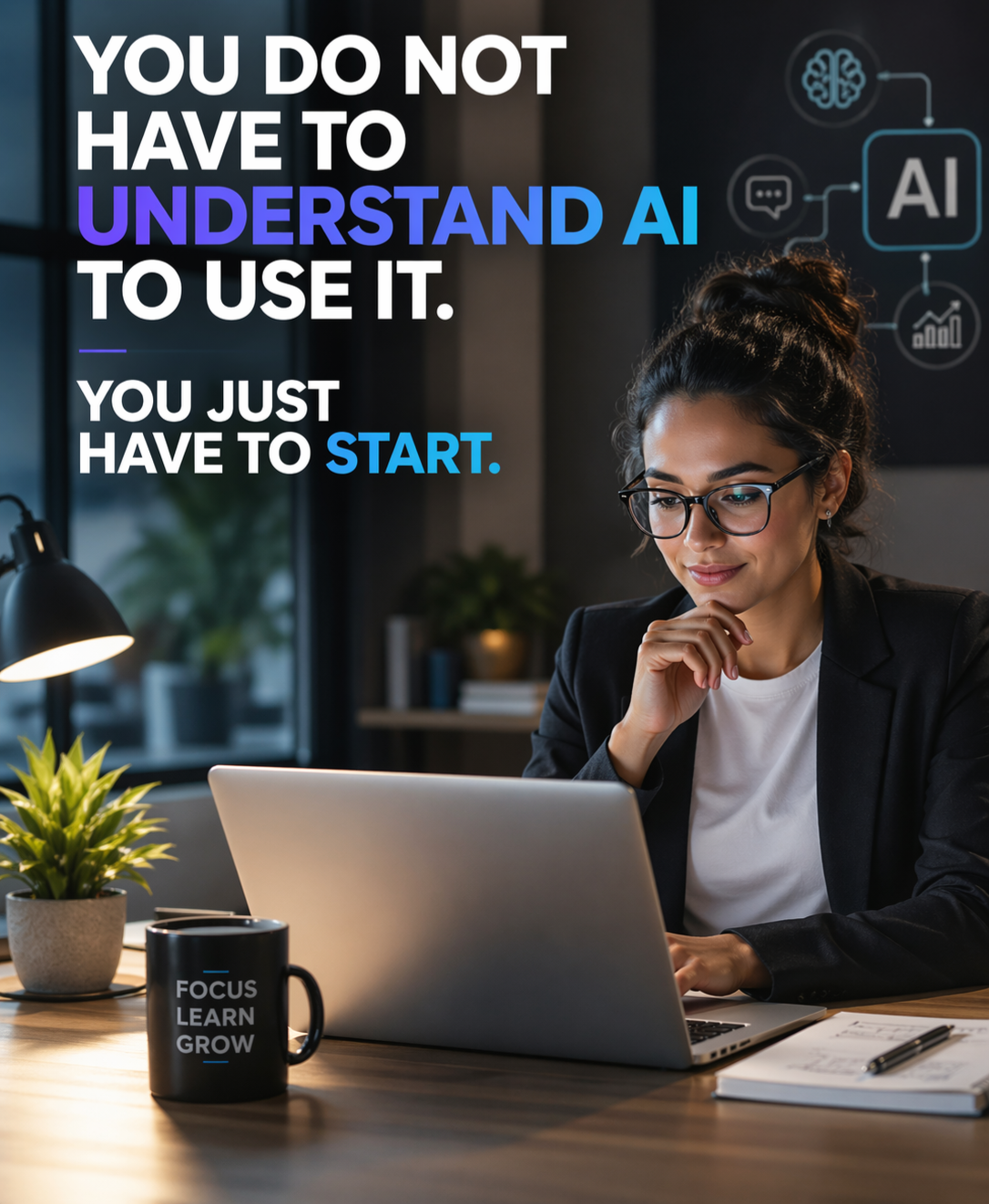
AI Educational Solutions helps small and medium-sized businesses (SMBs) in the Columbia, SC, Midlands, and nationwide implement AI tools that actually stick. If you are ready to stop doing work that a computer can do, let's talk.

Michael Carmine
Founder & CEO | AIEducationalSolutions.org